
7 Signs Your Furnace Needs Service
What Kingston area home owners should look out for
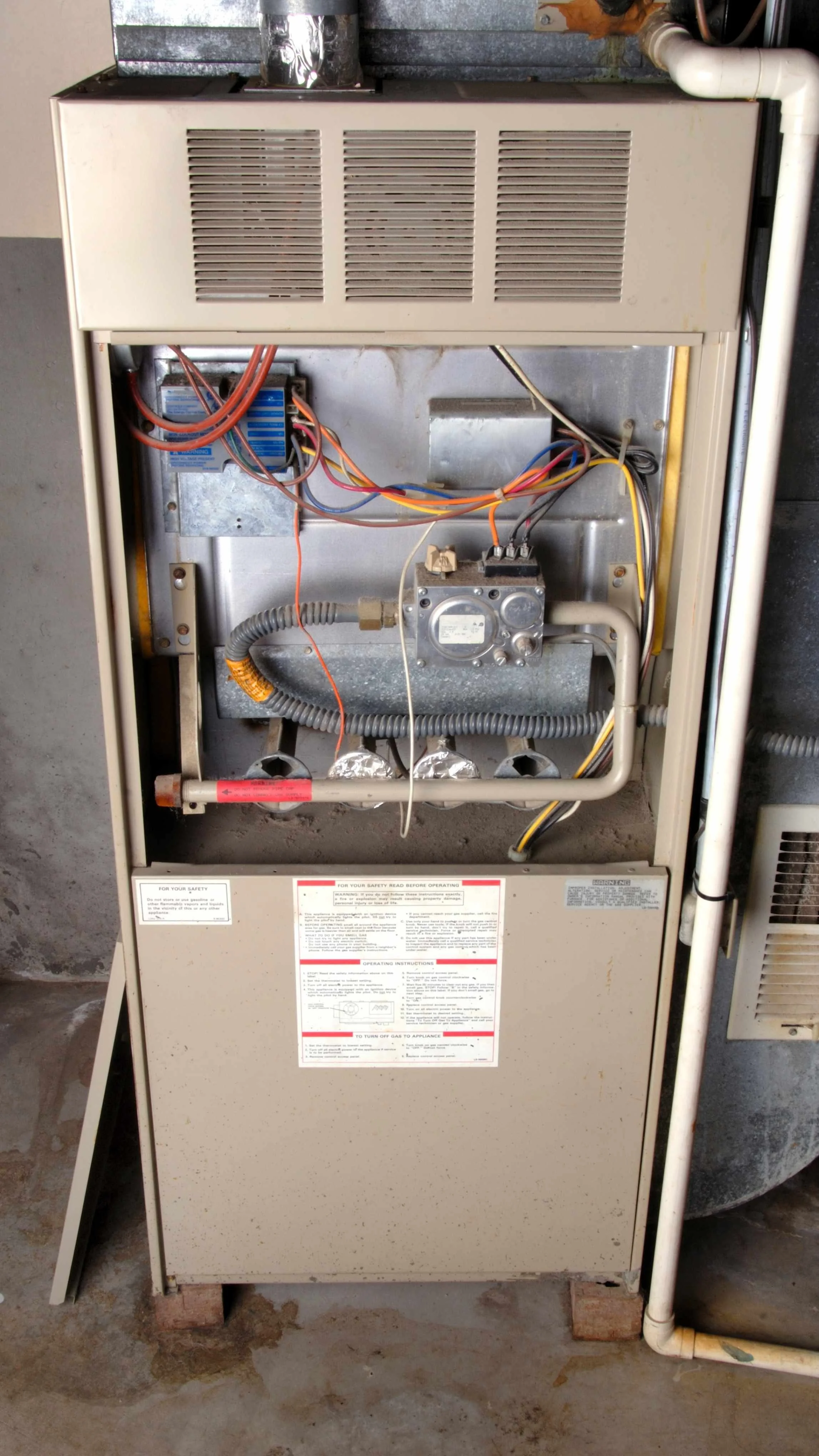
It's mid-February in Eastern Ontario, and if your furnace has been running hard since November, now's the time to check in on it. We've been fielding a lot of heating calls lately, and most of them come down to one thing: homeowners didn't notice the early warning signs until the system failed. Here's what to listen to and watch for.
1. Unusual Noises From the Furnace
Your furnace should sound like background noise. A steady hum or soft whoosh from the blower. New sounds are telling you something's wrong.
Banging or booming at startup usually means gas is building up in the combustion chamber because the burners are dirty or the igniter is slow to fire. When it finally ignites, you get a loud bang. This can crack the heat exchanger, which is expensive to fix and a potential safety issue.
Squealing or whining points to worn bearings or a deteriorating belt in the blower motor. Early on, this is an easy fix. Left alone, it gets costly.
Rattling often means loose panels or screws on the casing. Check if anything is visibly loose, but if the noise persists or is coming from inside the unit, call for service.
Grinding sounds like a broken garbage disposal and suggests worn bearings in the air handler motor.
What to do: Don't ignore new furnace noises. Call for an inspection before a small problem becomes a big repair bill.
2. Strange Smells
Your furnace shouldn't smell like much of anything. Here's what different odours mean.
Burning dust smell is normal the first time you run your furnace after a long idle period. If it lingers more than a day or two, your air filter probably needs replacing. If it persists after that, shut down the system and call us.
Burning plastic, rubber, or an electrical smell signals an overheating component. This is a fire hazard. Turn off the furnace immediately and call for service.
A rotten egg or sulphur smell is the big red flag. Natural gas is odourless, but utility companies add a sulphur-like scent so you'll notice a leak. If you smell this, leave your home, call your gas utility, and contact emergency services. Don't try to find the source yourself.
A musty or mouldy smell means mould or mildew is growing in your ductwork, usually because of moisture buildup. This affects air quality and can trigger allergies.
What to do: For gas or burning smells, treat it as an emergency. For other odours, check your air filter first. If it's dirty, replace it. If the smell doesn't go away, get a professional inspection.
3. Inconsistent Heating or Cold Spots
If some rooms stay cold while others are warm, or your furnace struggles to reach the temperature on the thermostat, something's restricting heat flow.
Blocked vents or ductwork leaks are common culprits. Furniture can cover vents. Ducts can leak or disconnect, so heat escapes before it reaches a room.
A dirty air filter restricts airflow, forcing the furnace to work harder and heat unevenly. This is an easy fix; just replace the filter.
Thermostat problems can also cause this. If the thermostat is in a drafty spot, near a heat source, or just worn out, it sends wrong signals to your furnace.
What to do: First, check all your vents and make sure nothing is blocking them. Replace your air filter if it's gray or clogged. If the problem persists, have a technician check your thermostat placement and ductwork.
4. Higher Energy Bills Than Usual
Winter heating bills vary with temperature, but if your bill jumped significantly compared to last February without any change in how you use heat, your furnace is struggling. A furnace working harder than it should because of dirty components, a clogged filter, or worn-out parts will burn more fuel or electricity to do the same job. You end up paying more for less comfort.
What to do: Schedule a professional inspection. A furnace running efficiently can save you money every month. We can check for issues like clogged burners, weak igniters, or airflow problems that drive up costs.
5. The Furnace Keeps Turning On and Off
If your furnace cycles on and off rapidly (sometimes every few minutes), it's called short cycling. This wears out components fast and wastes energy.
Restricted airflow from a dirty filter or blocked vents is the most common cause. The furnace overheats, a safety switch shuts it down, then it cools and restarts. Over and over.
A bad thermostat or one in the wrong location can trick your furnace into thinking the house is already warm.
An oversized furnace heats your home too quickly, satisfies the thermostat, and shuts off before completing a full cycle.
What to do: Replace your air filter and check that all vents are open. If short cycling continues, call for service. Each rapid start stresses the system.
6. Yellow Pilot Light (Older Gas Furnaces)
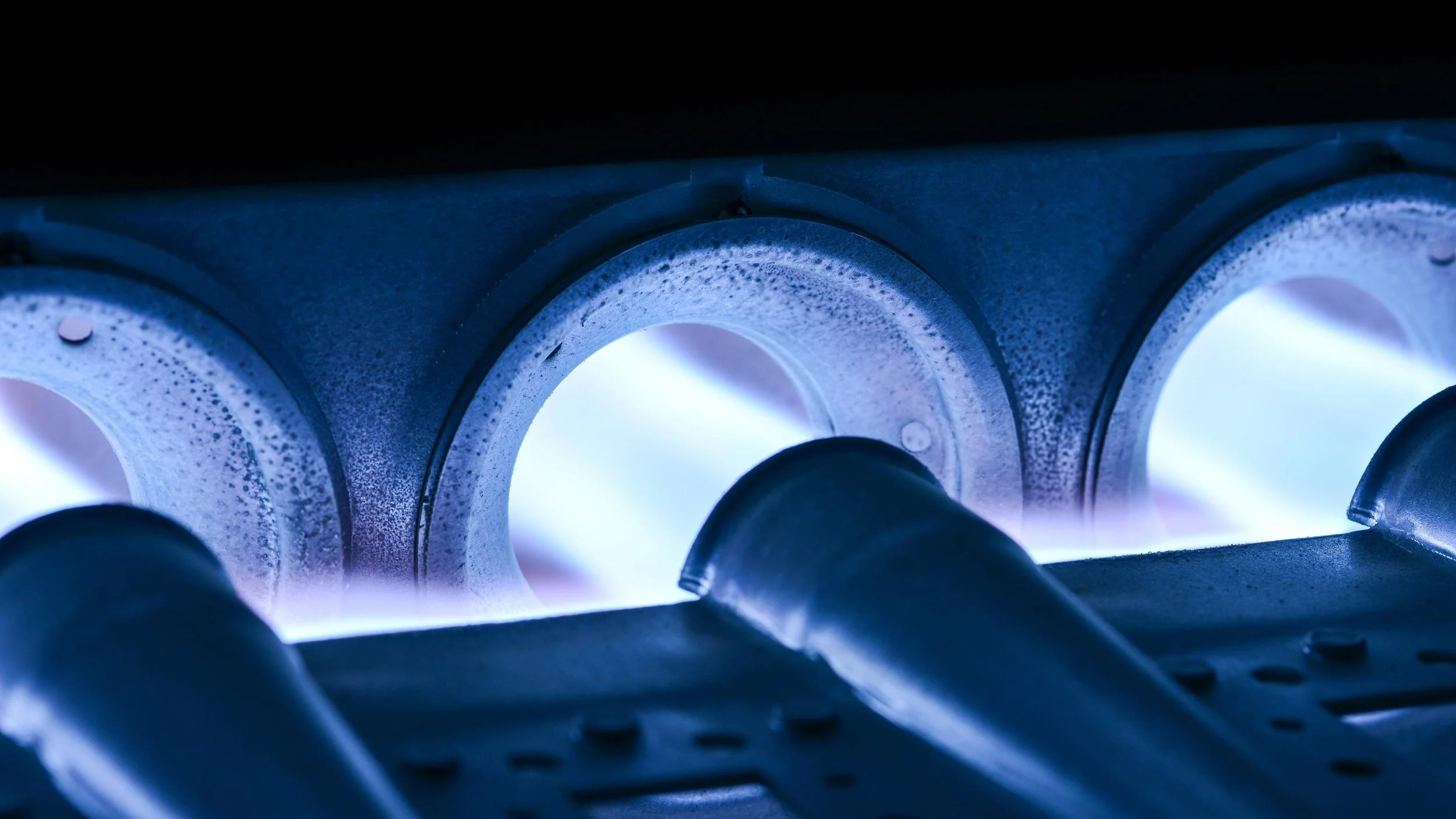
On older gas furnaces with a standing pilot light, the flame should be a steady, crisp blue. Yellow or orange is a serious warning. A yellow flame means incomplete combustion, which produces carbon monoxide (CO). CO is colourless, odourless, and deadly.
What to do: If you see a yellow pilot light, turn off the furnace immediately, open windows to ventilate, and call a certified HVAC technician. Don't attempt to fix this yourself. Make sure your home has working carbon monoxide detectors on every level.
7. Water Pooling Around the Furnace
High-efficiency furnaces produce condensation as part of normal operation, but pooling water means something's blocked.
A clogged condensate drain is the most common issue. Dirt or algae builds up in the drain line, and water backs up instead of flowing out. A frozen drain line in very cold weather can also block flow.
A faulty condensate pump (if your system has one) or issues with a connected humidifier can cause leaks too.
What to do: Check the condensate drain line for visible blockages or kinks. If you can't spot the problem, call for service. Unaddressed water leaks can damage your basement, promote mold, and create electrical hazards.
Why These Signs Matter
Catching furnace problems early keeps your family safe, your bills manageable, and your system running longer. Many of these issues, noises, smells, and short cycling show up weeks or months before a complete breakdown. If you're noticing any of these signs, it's worth a professional look. The good news: most furnace issues are preventable with annual maintenance. A furnace that's cleaned, inspected, and tuned runs efficiently, stays safer, and costs less to operate. In Eastern Ontario winters, that's peace of mind worth having.
Next Steps
If you're seeing or hearing any of these warning signs, don't wait until your heat fails on the coldest night of the winter. Get a free consultation from ECM to have your furnace inspected. We serve Kingston, Belleville, Loyalist Township, Gananoque, and throughout Eastern Ontario.
Not sure what's wrong? Start with our heating services page or furnace repair information to learn more.